




macOS is a core part of the mobile development lifecycle and comes with strong platform security features. But "secure by default" is not the same as "secured for your environment."
In mobile CI/CD, macOS machines serve as build infrastructure, not just developer workstations. During builds, these machines work with source code, signing identities, environment variables, and automation scripts, and they sit directly in the release pipeline. That is why macOS security hardening is an essential part of keeping mobile CI/CD environments secure, predictable, and reliable.
In this article, we look at macOS hardening from a mobile CI/CD security perspective: what it is, why it matters, how it relates to the security features built into macOS, what the benefits and trade-offs look like in practice, and how Appcircle applies hardening to the macOS build infrastructure that powers customer pipelines.
What Is macOS Hardening?
macOS hardening is the process of reducing a Mac's attack surface by disabling unnecessary services, restricting access paths, enforcing secure configurations, and limiting what the system is allowed to do on the network. The goal is simple: the machine should do exactly what it is meant to do, and nothing else.
Hardening is not something you turn on with a single setting. In practice, it covers several areas:
- System configuration: Enforcing settings such as Gatekeeper, System Integrity Protection (SIP), firmware protections, and secure boot policies.
- Service reduction: Disabling background daemons and agents that serve no purpose in the machine's role, such as Siri, AirDrop, Handoff, location services, or media services.
- Access control: Restricting remote access (SSH, Screen Sharing), enforcing key-based authentication, disabling guest accounts, and applying least-privilege principles.
- Network control: Filtering inbound and outbound traffic, typically with the built-in Packet Filter (pf) firewall, so the machine only talks to the endpoints it needs.
- Telemetry reduction: Blocking or disabling analytics, crash reporting, and other phone-home behavior that generates network noise and shares data you may not want to share.
This approach follows a general server security principle: a server should only run the services it needs, and unnecessary services should be removed, disabled, or restricted to reduce exposure. NIST's long-standing server security guidance focuses on selecting, implementing, and maintaining security controls for systems that provide services over networks, which maps well to CI/CD infrastructure.
Why macOS Hardening Matters for Mobile CI/CD
Every Running Service Is Attack Surface
The core security argument for hardening is straightforward: software that is not running cannot be exploited. A vulnerability in a media service, an assistant daemon, or a sharing feature is irrelevant if that component is disabled. Reducing the number of active services directly reduces the number of ways an attacker can get in or move laterally.
This logic applies to any operating system, but it is especially relevant for Macs used as servers or build machines, because macOS comes with a full desktop feature set that a headless machine will never use.
Macs Are Now Core Infrastructure
For any team delivering iOS applications, Macs are not just developer laptops. They are build servers, signing machines, and release infrastructure. A compromised build machine is one of the worst-case scenarios in a software supply chain: it has access to source code, signing certificates, provisioning profiles, and API credentials. CI/CD infrastructure is a high-value target precisely because it sits between source code and production.
Modern macOS CI/CD setups also typically involve two layers with different hardening needs: the durable physical host, usually a Mac mini or Mac Studio, which needs hardened remote access and strict firewall rules, and the ephemeral guest VMs where builds actually run, which need a minimal, quiet, and reproducible image.
Compliance and Audit Requirements
Regulated industries such as banking, insurance, and healthcare increasingly require documented, verifiable secure configurations for every system in scope, including macOS. Control frameworks like NIST 800-53 define what needs to be enforced, and macOS-specific baselines such as the DISA STIGs and the CIS Benchmarks translate those requirements into concrete, auditable settings. Auditors expect evidence that these baselines are applied and maintained.
Operational Benefits Beyond Security
Hardening also brings practical benefits beyond security. Fewer background services means fewer processes competing for CPU and memory, fewer surprise network requests hitting corporate firewalls, and more predictable system behavior. On build machines, that predictability translates into more consistent build times.


macOS Hardening vs. macOS Security Features
macOS hardening does not mean replacing Apple's built-in security model. It means building on top of it.
Apple provides several important security layers. For example, XProtect provides built-in malware detection and removal, and Apple updates its malware signatures independently from full system updates. macOS also includes a built-in firewall that can protect a Mac from unwanted network access and denial-of-service attacks. FileVault provides full-volume encryption for data at rest, which is important for many endpoint and enterprise use cases.
Hardening adds environment-specific decisions on top of these protections. For example, a developer laptop and a headless Mac mini runner may need different configurations. A developer laptop may need Bluetooth, iCloud, AirDrop, interactive prompts, and local productivity apps, while a CI/CD runner usually does not.
macOS Hardening Benefits and Challenges
In practice, macOS hardening covers areas such as restricting remote access, disabling unused services and telemetry, controlling outbound network traffic, and continuously verifying that the hardened state stays in place. Done well, it delivers clear gains, but it also comes with trade-offs that teams need to manage:
| Benefits | Challenges |
|---|---|
| Smaller attack surface. Services that are not running cannot be exploited. | Functionality loss. Disabling the wrong service can break workflows, so every change needs testing first. |
| Reduced network noise. Fewer unexpected outbound requests hitting corporate firewalls and inflating logs. | macOS updates can undo work. Major upgrades may re-enable services, so baselines need revalidation with each release. |
| Better performance. Fewer background agents means more CPU and memory for actual workloads, and more consistent build times. | Platform constraints. Some settings, such as privacy prompts, are hard to automate from the command line alone without extra tooling. |
| Easier compliance. A recognized hardening baseline gives enterprises an audit-ready, documented security posture. | Maintenance overhead. A hardening baseline needs ownership, version control, and periodic audits, not a one-time script run. |
| Easier incident response. On a minimal system, anomalous processes and connections stand out. | Not a silver bullet. Hardening is defense in depth, not a replacement for patching, access control, and secrets management. |
For most organizations, the balance is clearly positive, especially for server-role Macs. The key is treating hardening as an engineering practice with testing and verification, not as a checklist to run once.
How Appcircle Approaches macOS Security Hardening
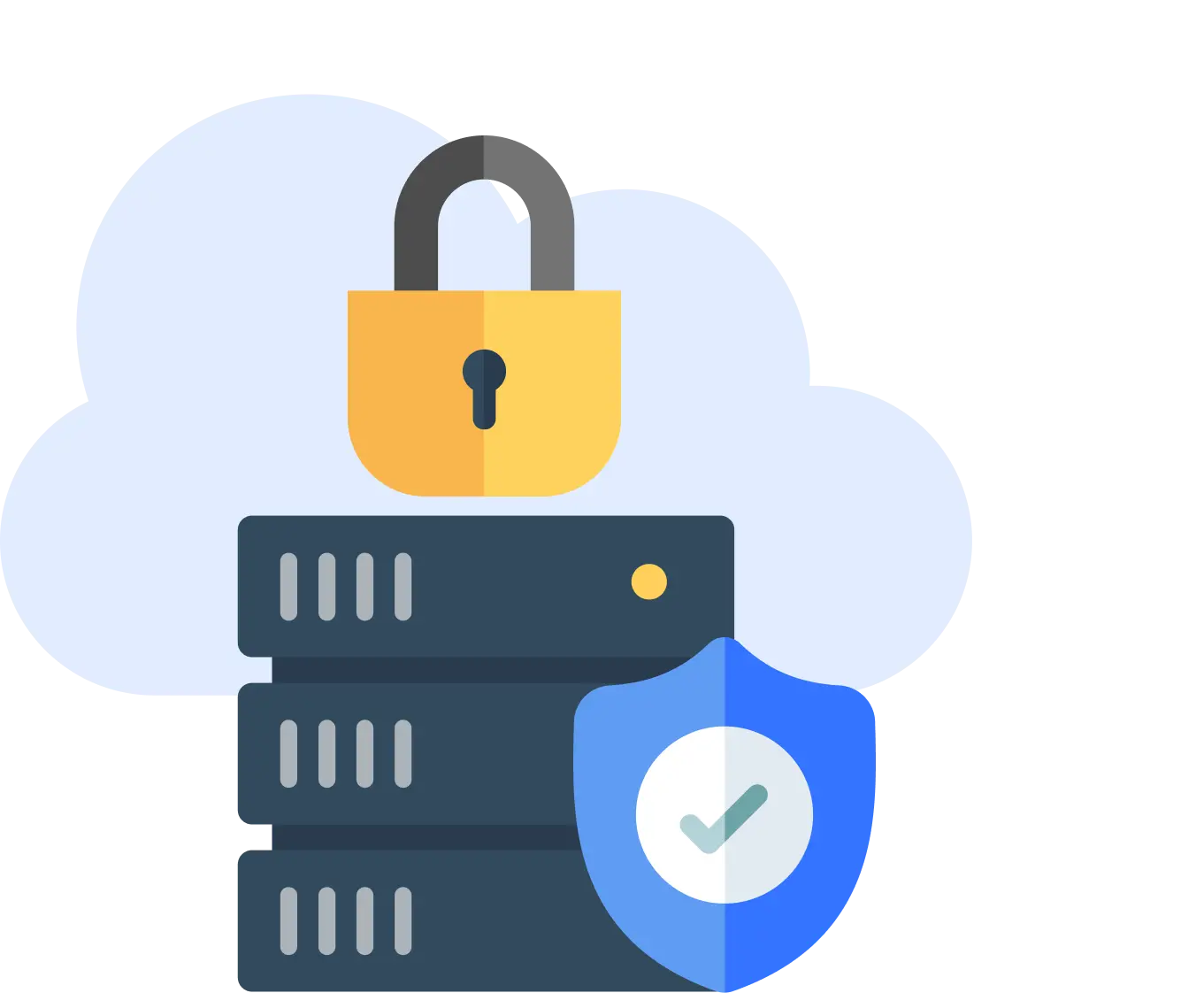
Security is built into Appcircle's architecture at every layer. Builds run in isolated environments, source code is fetched with read-only access and never stored, and secrets such as signing identities stay encrypted in HashiCorp Vault, injected only for the duration of a build. macOS hardening extends this defense-in-depth approach down to the operating system inside every runner VM:
- Hardened macOS runner VMs. Appcircle provides ready-to-use macOS VM images with the full toolchain mobile teams need, including Xcode versions. These images come pre-hardened: unnecessary consumer services and Apple's analytics and telemetry services are disabled before the image is delivered, so every runner starts from a minimal, locked-down baseline.
- Clean builds on hardened images. Every build starts on a fresh VM created from the hardened image, and the VM is terminated when the job completes. Each build gets the same hardened baseline every time, with no configuration drift and no leftovers from previous builds.
- Smaller attack surface. Every disabled service is a component that can no longer be targeted. Potential vulnerabilities in those services simply cannot affect Appcircle runners, because the code is never running.
- Clean network behavior. Hardening eliminates unnecessary outbound connections at the source, which matters in enterprise networks where every unexpected connection has to be inspected, blocked, or explained.
- Host machines stay in customer control. The physical Macs that run these VMs belong to customers in self-hosted deployments, so Appcircle provides guidance there rather than enforcing an intrusive configuration on customer-owned hardware.
- Available in both Cloud and self-hosted deployments. Appcircle Cloud and self-hosted customers benefit from the same hardened runner images, backed by SOC 2 compliance, ISO certification, and regular penetration testing.
The impact is not theoretical. We benchmarked a hardened and an unhardened VM built from the same image, and the difference is clear:
| Metric | Unhardened VM | Hardened VM | Change |
|---|---|---|---|
| Running processes | 511 | 395 | ~23% fewer |
| Active system services | 177 | 159 | 18 fewer |
| Active user services | 190 | 133 | ~30% fewer |
| CPU idle (120s average) | 70.6% | ~91.0% | +20 points |
| CPU busy (user+sys) | ~29.5% | ~9.0% | ~3.3x lower |
| Active RAM used | ~4498 MB | ~4237 MB | ~6% lower |
A hardened runner spends its resources on builds, not on background noise. The same change that shrinks the attack surface also makes builds faster and more consistent.
This matters because CI/CD performance is not only about raw machine power. It is also about consistency. A runner with fewer unnecessary background agents and less CPU jitter is easier to reason about, easier to monitor, and better aligned with clean build environment principles.
Conclusion
macOS hardening is the difference between a Mac that is secure for a consumer and a Mac that is secured for a specific job. For teams running macOS as build infrastructure, it delivers on three fronts at once: a smaller attack surface, quieter and more firewall-friendly network behavior, and measurably better build performance through reduced background load.
If your mobile CI/CD runs on macOS, hardening should not be an afterthought. It is one of the highest-leverage improvements you can make to both the security and the reliability of your release pipeline.
Frequently Asked Questions
1. Is macOS secure by default?
macOS provides strong built-in protections such as SIP, Gatekeeper, and XProtect, but its default configuration targets interactive desktop use. Server and CI/CD roles require additional hardening to remove services and behaviors that do not belong in those environments.
2. Does macOS hardening improve build performance?
Yes. Disabling background services reduces process count, CPU jitter, and memory pressure. In Appcircle's benchmarks, hardened macOS runner VMs ran about 23 percent fewer processes and consumed roughly 3.3 times less CPU while sitting idle, which supports faster and more consistent builds. However, hardening should be seen primarily as a security and reliability practice, not only as a performance optimization.
3. What is a clean build environment?
A clean build environment means each build starts from a known, isolated, and controlled state. This reduces the risk of leftover files, cached credentials, previous build artifacts, or configuration drift affecting the next build. Learn more in Why Build Isolation Matters for Secure Mobile CI/CD.
4. Is macOS hardening only about security?
No. Security is the main goal, but macOS hardening can also improve predictability, reduce background activity, lower network noise, and make CI/CD runners easier to monitor and maintain.
5. What services can be disabled on a macOS CI/CD runner?
This depends on the environment, but CI/CD runners usually do not need consumer-facing services such as media, sharing, discovery, location, or other background services unrelated to builds. The exact list should be validated against the build workflow.